Ecotourism is widely regarded as a key strategy for realizing the value of ecosystem services and enhancing sustainable livelihoods in mountainous regions. However, trade-offs and conflicts frequently arise between tourism development and ecological protection, demanding collaborative solutions among multiple stakeholders. Understanding how local residents perceive changes in ecosystem services, how they benefit economically from tourism, and how these factors shape their willingness to support conservation is essential for evidence-based planning and for the successful “Two Mountains” (lucid waters and lush mountains are invaluable assets) transformation.
In a study published in Journal of Outdoor Recreation and Tourism, researchers from Xishuangbanna Tropical Botanical Garden (XTBG) of the Chinese Academy of Sciences and their collaborators revealed a striking gap between regional economic boom and household income. Focusing on southwestern China’s UNESCO-listed Hani Rice Terraces, they found that while ecotourism has fueled substantial macroeconomic growth, the financial rewards have largely bypassed the indigenous Hani people, who are the primary custodians of this heritage.
The researchers surveyed 229 local households within the terrace ecotourism zone. Using regression analysis and structural equation modeling, they systematically assessed how residents perceive changes in ecosystem services driven by tourism, and how those perceptions affect community economics and conservation attitudes.
Residents reported strong positive synergies between tourism�driven economic improvements and several ecosystem services essential to their daily lives, including nutrient cycling, food supply, nature-based education, flood regulation, and pest and disease control. However, a clear trade-off emerged: perceptions of biodiversity and air quality declined, suggesting that current tourism practices may be eroding these critical ecological assets.
“The local economy is growing, but we are seeing a growing divide between regional development and indigenous well-being,” said BAI Yang of XTBG. “The direct economic benefits of ecotourism are concentrated in a very narrow slice of the population.”
Interestingly, even if people value the environment, they do not feel that protecting it pays off financially. This disconnect, the researchers warn, may undermine the intrinsic ecological culture that has long sustained the Hani people’s harmonious coexistence with nature. If residents see no direct economic stake in conservation, their motivation to engage in sustainable management could weaken, ultimately threatening the very tourism appeal of the region.
To address this, the researchers recommend local governments and tourism operators to move beyond standard tourism models and implement robust Payment for Ecosystem Services (PES) schemes. By developing stronger collaborative synergies, decision-makers can better balance economic and ecological benefits.
“Sustainable ecotourism must embed indigenous community well�being into governance frameworks from the start,” the researchers emphasized. “Without a fairer distribution of the economic pie, the region risks losing the landscape and culture that tourists come to see.”
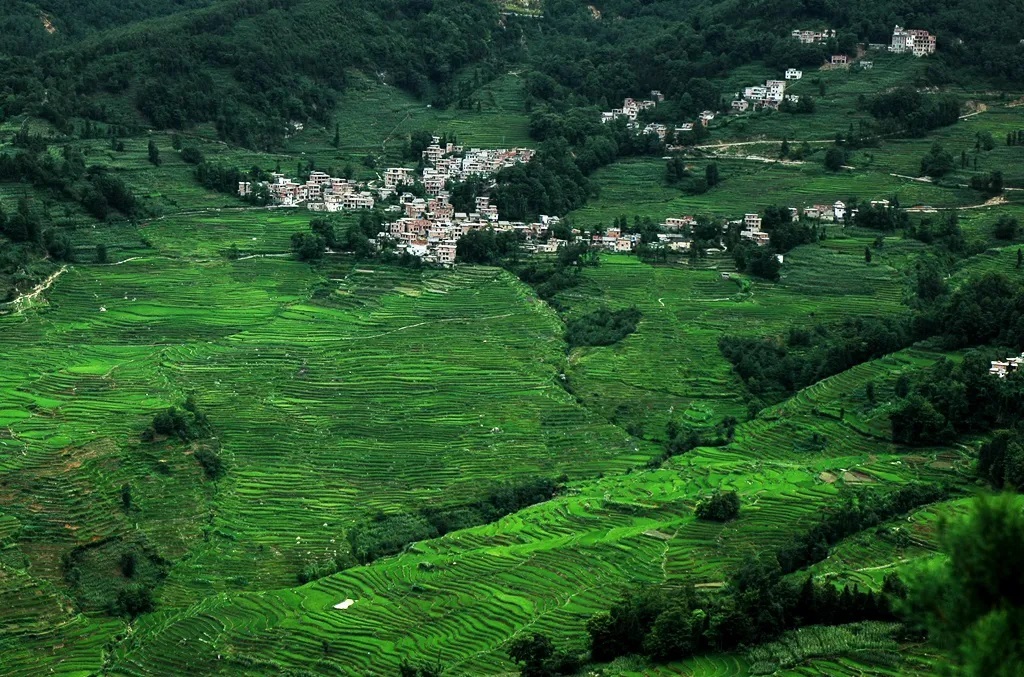
Hani Rice Terraces in Yuanyang. (Image from Yuanyang government website)
Available online: 24 July 2026


