A striking new species of darkling beetle has been discovered in the high-altitude forests of China's Ailao Mountains, adding a fourth member to the region's exclusive roster of endemic insects.
The newly described Morphostenophanes ailaoshanensis, named after its only known habitat, the Ailaoshan National Nature Reserve in central Yunnan, is a small but visually remarkable beetle measuring just 14.5 to 18.8 millimeters in length, roughly the size of a fingernail. Its body shimmers in dark metallic green with a bronze luster, and its wing covers (elytra) bear five distinct rows of ring-like depressions that glow with purplish-violet reflections.
Specimens were collected from two high-elevation sites: Heizhushan in Shuangbai County at 2,748 meters and Daxueguoshan in Xinping County at 2,840 meters. The species appears to be a true "high-altitude resident," inhabiting only dead wood in mid-mountain moist evergreen broadleaf forests above 2,700 meters.
The new species possesses a mosaic of traits that do not fully align with the current definition of the jendeki species group, to which it was initially thought to belong. Notably, its aedeagus structure differs from the typical jendeki-type, yet its overall habitus and elytral patterns closely resemble M. minor. This combination of characters suggests a transitional state, potentially representing a lineage evolving from an ancestor of the elegantulus-species group towards a miniaturized form adapted to high-altitude environments.
While it shares small body size and high-altitude habitat preferences with other members of that group, its distinctive ring-like elytral depressions and differences in genital structure suggest a more complex evolutionary history.
Their findings demonstrate that the current jendeki-group is an artificial ecological grade rather than a natural monophyletic clade. Consequently, they propose a formal reconstruction of this assemblage, partitioning it into three distinct lineages based on their divergent elytral morphology: the jendeki-species group (sensu stricto), the newly established minor-species group, and the reassignment of M. tuberculatus to the chongli-group.
The study was published in ZooKeyson June 15. It was completed by researchers from Xishuangbanna Tropical Botanical Garden (XTBG) and the Chuxiong Management Bureau of Ailaoshan National Nature Reserve, and Shanghai's Dacheng Xiaochong Studio.
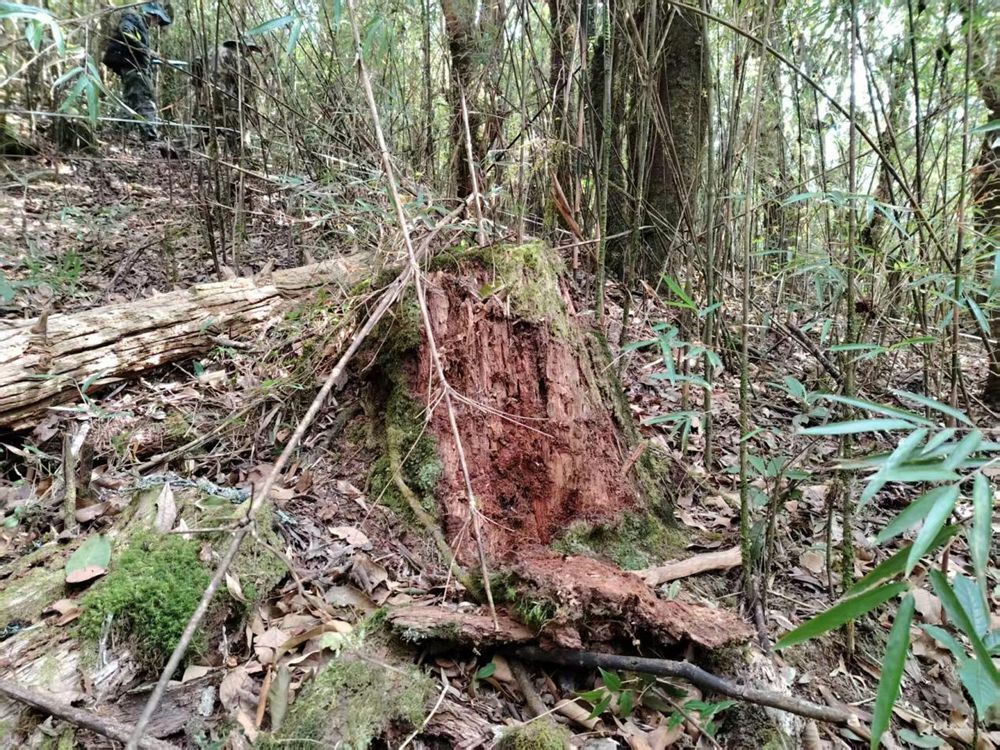
Habitat of Morphostenophanes ailaoshanensis.
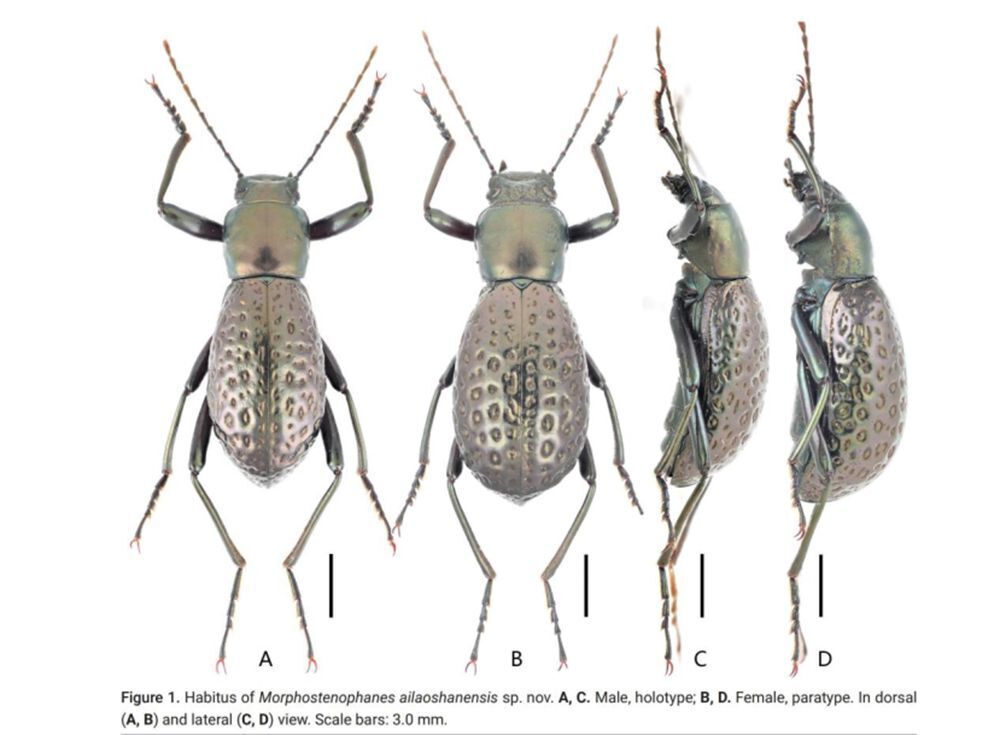
Morphostenophanes ailaoshanensis
Published: 15 June 2026


