In a new study published in Palaeogeography, Palaeoclimatology, Palaeoecology, researchers from Xishuangbanna Tropical Botanical Garden (XTBG) have uncovered the oldest known record of ring-porous wood in tropical Asia, shedding light on when woody plants began adapting to intensifying seasonal conditions driven by the early Asian monsoon. The researchers analyzed fossilized wood from the Eocene strata of the Na Duong coal mine in northern Vietnam and identified a new genus and species, Parasalicaceoxylon naduongensis, belonging to the Salicaceae family. The fossil exhibits a distinct ring-porous structure, characterized by large earlywood vessels transitioning to smaller latewood vessels—a key anatomical trait that enables trees to regulate water transport during seasonal drought or cold periods. This feature is widely regarded as an indicator of adaptation to strongly seasonal water availability. To understand the climatic context, the researchers employed the HadCM3B coupled ocean-atmosphere climate model. Their simulations suggest that while the late Eocene Asian monsoon was weaker and more diffuse than today, a seasonal rainfall pattern had already emerged. Precipitation seasonality in northern Vietnam was likely governed by the north-south migration of the Intertropical Convergence Zone (ITCZ), giving rise to monsoon-like conditions. By integrating fossil records across Asia, the researchers found that the spatial and temporal distribution of ring-porous wood from the late Eocene to the Pliocene closely mirrored the expansion of seasonal precipitation driven by the evolution of the Asian monsoon system. The emergence of deciduousness in East Asian angiosperms, along with the evolution of ring porosity as a key adaptive trait, is likely tied to the enhancement of precipitation seasonality during the Paleogene-Neogene period. The presence of ring-porous wood in the fossil record thus serves as a robust proxy for reconstructing past deciduous leaf habits and understanding ancient monsoon regimes.
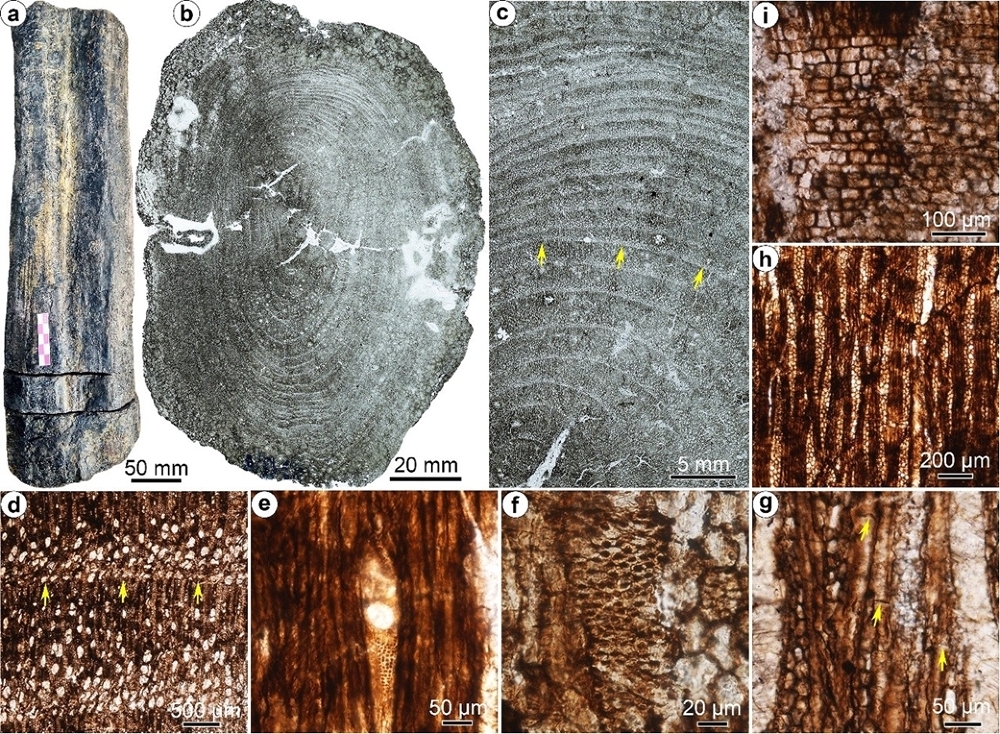
Parasalicaceoxylon naduongensis gen. et sp. nov.
Contact LI Shufeng Ph.D Principal Investigator Xishuangbanna Tropical Botanical Garden, CAS E-mail: lisf@xtbg.org.cn
|


