As climate change intensifies, compound drought-heat events have become key drivers of global tree mortality. However, it remains poorly understood how woody plants coordinate their functional traits to endure chronic dry-hot conditions.
In a study published in Plant Physiology and Biochemistry, researchers from the Xishuangbanna Tropical Botanical Garden (XTBG) of the Chinese Academy of Sciences and their collaborators investigated the adaptive strategies of Pistacia weinmanniifolia, an evergreen hardy tree species distributed across three climatically distinct regions in Yunnan Province. The study revealed the biological mechanisms underlying the species’ sustained tolerance to prolonged dry-heat stress through integrated stomatal and wax regulation.
By comparing populations from a prolonged dry-heat valley (Jinsha River), a humid-heat tropical rainforest (Xishuangbanna), and an intermediate transitional zone (Chengjiang), the researchers detailed the precise anatomical and chemical adjustments that enable this species to decouple leaf temperature from scorching ambient conditions.
They systematically analyzed leaf morphology, photosynthetic pigment content, and the structure and chemical composition of the leaf epidermal wax layer. Their findings revealed a sophisticated, two-pronged adaptive strategy involving the coordinated regulation of stomata and epicuticular waxes.
In the extreme dry-heat environment, leaves of Pistacia weinmanniifolia exhibited significantly lower specific leaf area and reduced photosynthetic pigment content compared to those in humid and transitional environments.
Under dry-heat stress, the trees did not alter the density of their stomata (the pores used for gas exchange). Instead, they significantly increased individual stomatal area. This adjustment is believed to optimize the leaf's ability to cool itself through transpiration without creating excessive vulnerabilities for water loss.
“Our findings demonstrate that Pistacia weinmanniifolia employs an integrated stomatal–wax regulatory strategy to cope with dry-heat stress,” said TIAN Bo of XTBG. “By enlarging stomatal pores without increasing their number, the plant enhances its cooling capacity. At the same time, by boosting the synthesis of specific alcohol-based waxes, it builds a protective barrier that reflects light and reduces water loss. This combination of traits underpins the species' remarkable tolerance to extreme, prolonged dry-heat conditions.”
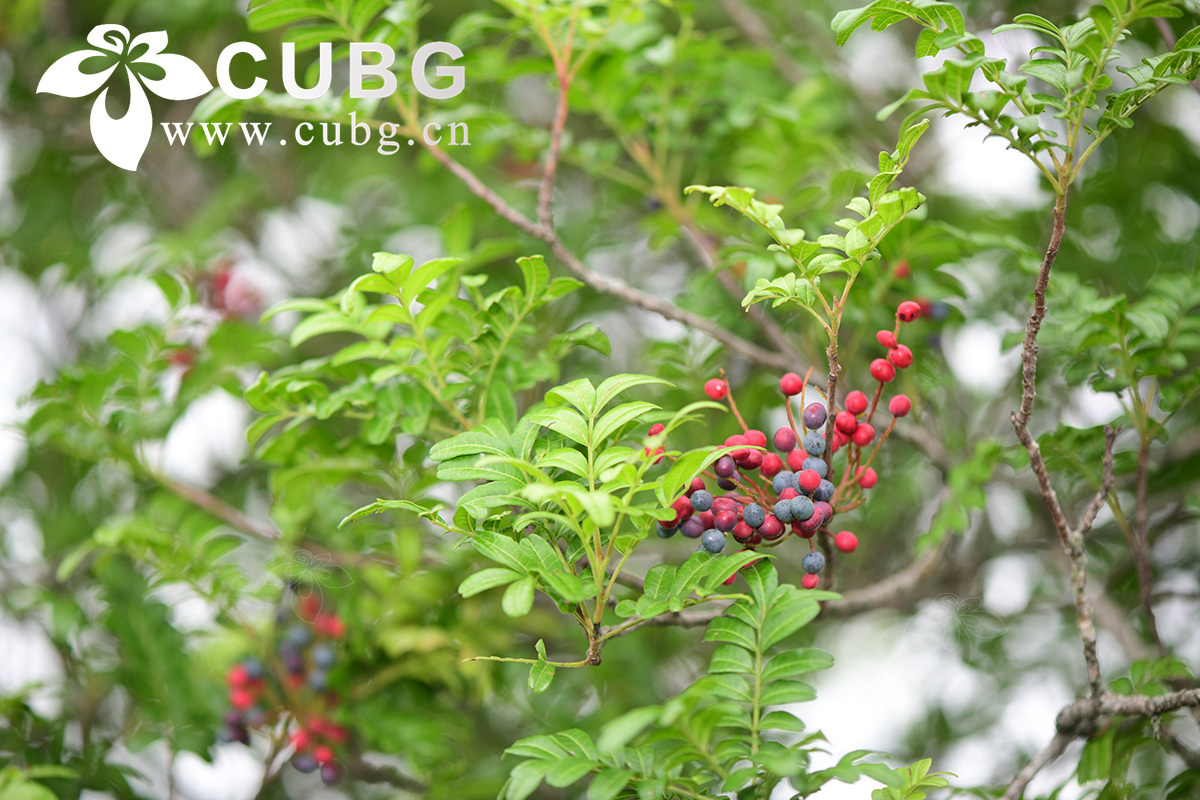
Pistacia weinmanniifolia (Image by ZHU Renbin)
Available online: 10 February 2026


