In a study published in Journal of Ethnopharmacology, researchers from Xishuangbanna Tropical Botanical Garden (XTBG) of the Chinese Academy of Sciences have identified a rare natural compound derived from the Teak tree (Tectona grandis) that works in two distinct ways to combat diabetes and lipid disorders.
Using a bioactivity-guided isolation approach, the researchers isolated a rare double-quinone molecule named Tectograndone (TG1). For the first time, they showed that TG1 can both increase glucose absorption in fat cells and block a key enzyme involved in breaking down dietary fats.
To elucidate the molecular mechanisms underlying TG1's biological activity, the researchers integrated complementary methodologies including cellular imaging techniques (immunofluorescence and Western blot analysis), enzymatic assays, and computational modeling approaches (molecular docking and dynamics simulations).
Their results showed that TG1 significantly enhanced glucose uptake in adipocytes while potently inhibiting pancreatic lipase, a crucial enzyme for lipid digestion.
Mechanistic investigations revealed that TG1 activates 5′-AMP-activated protein kinase (AMPK), a key cellular energy sensor implicated in metabolic regulation. This activation subsequently induced translocation of the glucose transporter GLUT4 to the plasma membrane, thereby facilitating cellular glucose uptake. Significantly, this effect occurred independently of insulin signaling pathways, suggesting potential therapeutic efficacy in insulin-resistant conditions.
Furthermore, they found that TG1 acted as a "mixed-type inhibitor" of pancreatic lipase, forming a stable complex with the enzyme and suppressing its ability to digest fats, which could help manage postprandial lipid levels.
When given to normal mice, TG1 significantly improved glucose tolerance, confirming its glucose-lowering effect in a living organism.
Their findings not only provide a scientific validation for the traditional use of Tectona grandis in Indian medicine, but also identify TG1 as a promising multi-target lead candidate for the treatment of diabetes and lipid disorders.
"We have not only validated the traditional use of Teak but also pinpointed TG1 as the key constituent responsible for its effects. Its dual action on two interconnected metabolic pathways (glucose uptake and lipid digestion), makes it an exceptionally promising lead molecule," said ZHANG Yumei of XTBG.
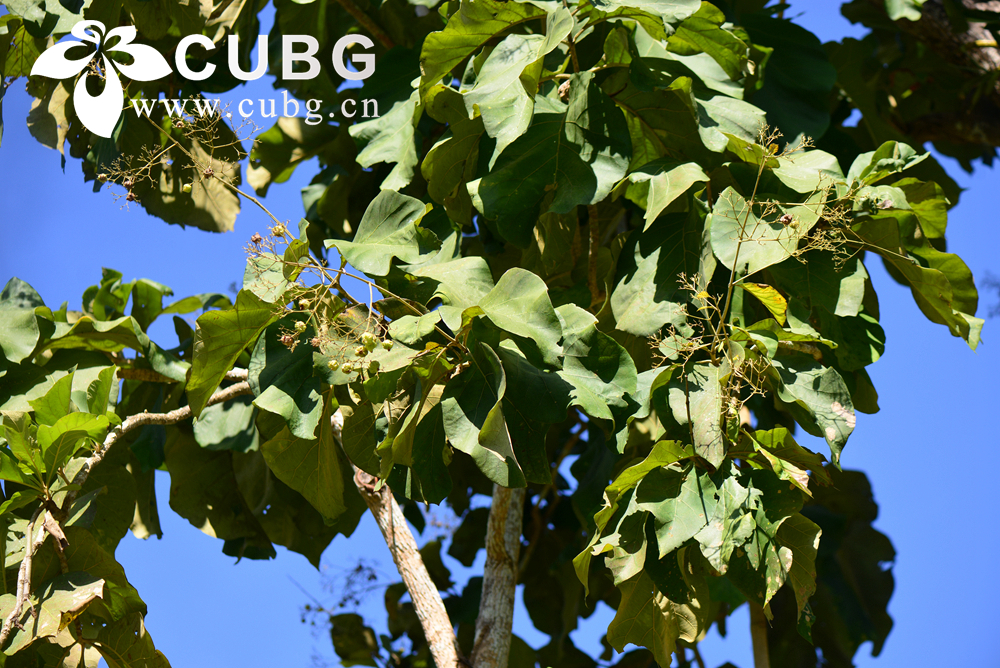
Tectona grandis (Image by ZHU Renbin)
Available online: 29 January 2026


