In a study published in Conservation Letters, researchers from Xishuangbanna Tropical Botanical Garden of the Chinese Academy of Sciences demonstrate that place-based education significantly enhances pro-nature conservation behavior in adolescents. The study showed that a strong sense of place gives people the confidence to act for conservation, which drives them to take actual steps to conserve nature.
To tackle the ongoing biodiversity crisis, effective conservation strategies are essential. The researchers proposed and validated a novel model showing that a sense of place (the emotional and cognitive bond with a location) enhances conservation agency (one’s belief in their ability to make a difference), which then promotes pro-nature conservation behavior (ProCoB).
Using Bryde’s whale conservation in China’s Weizhou Island as a case study, the researchers designed a three-month educational intervention program involving 110 adolescents . Moving beyond traditional lectures, the curriculum combined participatory activities and advocacy initiatives, encouraging students to apply what they learned to real conservation efforts.
Results showed that the program increased both the participants’ confidence in their ability to act and their engagement in conservation behaviors, such as sharing knowledge, initiating nature observations, and intervening to prevent environmental damage. Notably, the participants' conservation agency and behaviors continued to improve even after the intervention, particularly among students involved in volunteer advocacy. Qualitative interviews showed a clear shift from expressing concern to actively proposing and implementing solutions.
Furthermore, the structural equation modeling confirmed the pathway: a strengthened emotional and cognitive connection to a location (Sense of Place) directly increased agency, which was the key driver of conservation behavior. The model successfully explained 65.8% of the variance in agency and 30.7% in behavior.
They also found that subjective norms and peer culture played a crucial supporting role in developing adolescents' conservation agency.
“Our findings indicate that well-designed, place-based learning can effectively close the gap between wanting to help the environment and actually taking action. By focusing on this kind of hands-on, experience-driven education, we can empower young people to become active guardians of biodiversity,” said CHEN Jin of XTBG.
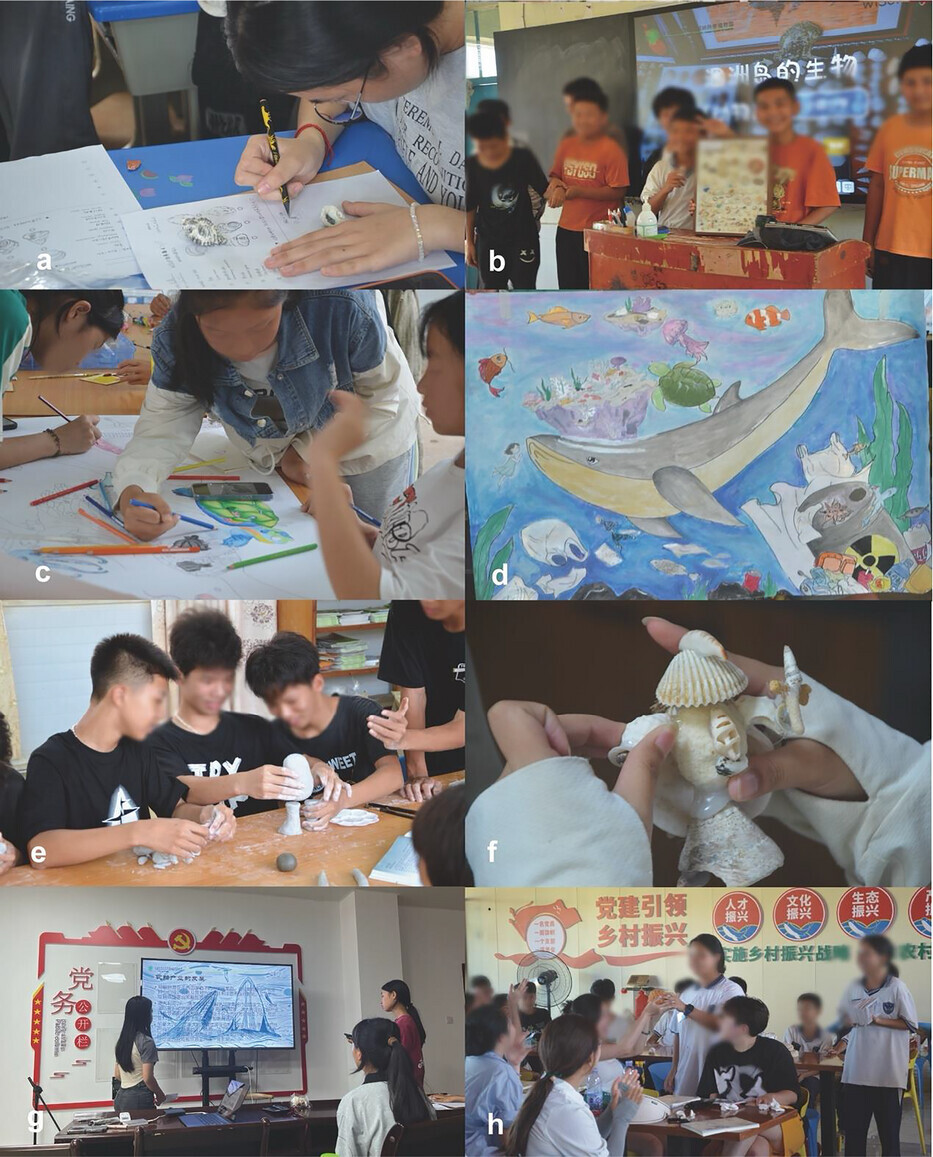
Photos showing some of the activities from the program. (Image by CHANG Ludan)
First published: 16 January 2026


