With rapid urbanization and shifting lifestyles, restoring the balance between humans and nature has become increasingly critical. In an editorial published in Integrative Conservation, researchers proposed a comprehensive framework centered on inclusivity and fostering multidimensional connections to strengthen the relationship between people and the natural world.
The framework proposed to expand the settings beyond traditional outdoor spaces to include managed environments (parks, botanical gardens), built settings (museums, aquariums), and digital platforms. It also called for engaging diverse communities across age, geographic location, cultural background, and socioeconomic status to ensure equity.
Concerning content of nature education, the researchers suggested integrating ecological inquiry with artistic expression, cultural perspectives, traditional knowledge, and pressing societal issues like climate change.
To ensure effectiveness, the researchers emphasized co-design with communities, varied pedagogical methods (e.g., citizen science, arts), and robust evaluation.
According to the researchers, inclusive nature education aims to foster deep, multifaceted connections that extend beyond knowledge acquisition, shaping attitudes, behaviors, and societal engagement. These connections span three interrelated domains: human–nature, people–place, and people–people .
The researchers argue that advancing inclusive nature education is critical for building ecological literacy, promoting sustainability, and contributing meaningfully to global biodiversity conservation goals, such as those outlined in the Kunming-Montreal Global Biodiversity Framework. They call for more systematic, interdisciplinary research and stronger collaborative networks linking scholars, practitioners, and policymakers.
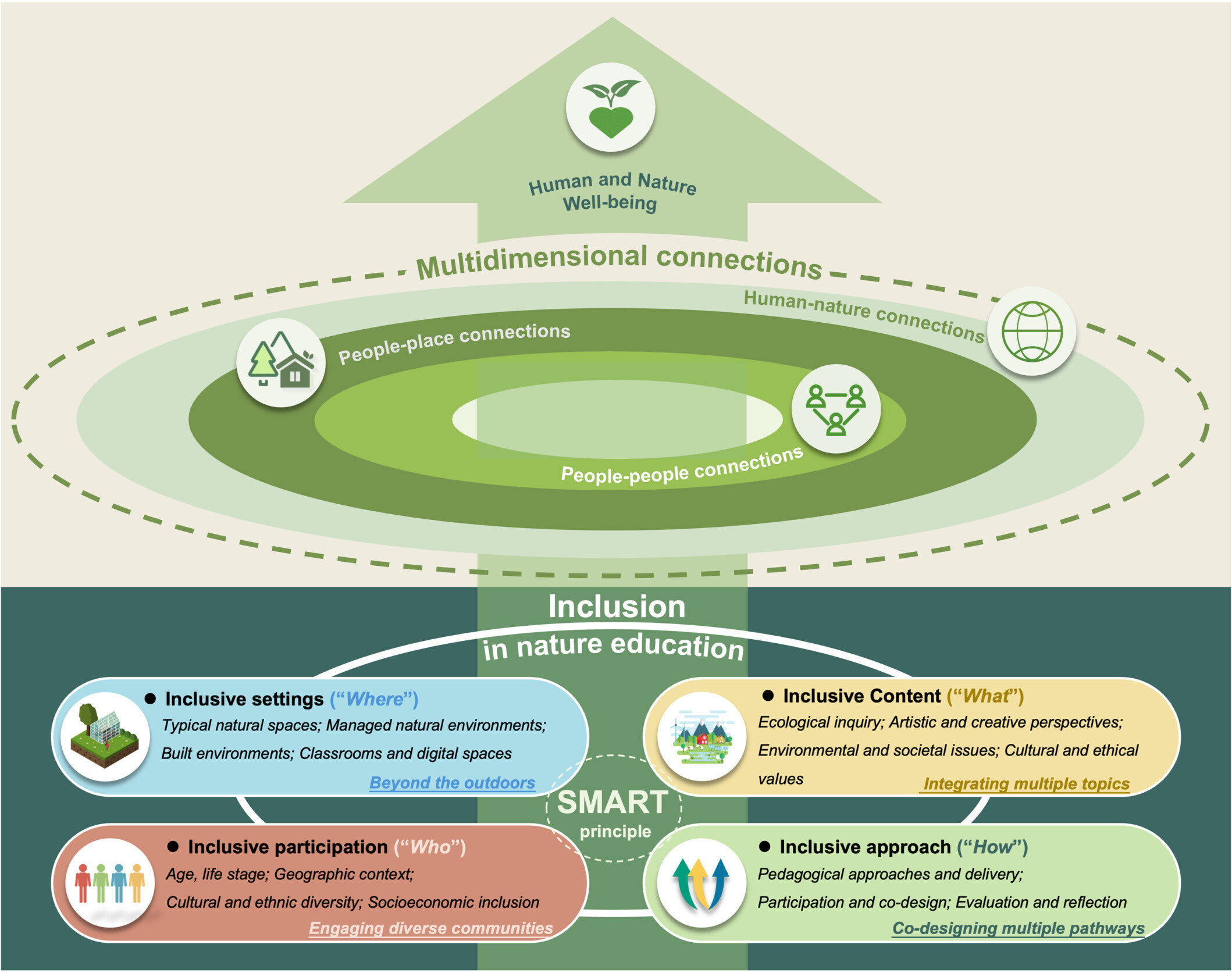
The proposed framework of inclusive nature education and orientations of multidimensional connections.
Contact
CHEN Jin Ph.D Principal Investigator
Xishuangbanna Tropical Botanical Garden, the Chinese Academy of Sciences
E-mail: cj@xtbg.org.cn
First published: 17 December 2025


