Afterlife effects of lianas are important to forest biogeochemistry
Lianas are woody climbers that use trees for mechanical support but have their own root systems. They are abundant woody growth forms in tropical and subtropical forests and their abundance and biomass are on rise due to either natural or anthropogenic disturbance . Over the past two decades, liana ecology studies have rotated around their impacts on forest ecosystem functioning while lianas are alive. However, the role of dead lianas in forest ecosystems is poorly understood.
In a study published in Global Change Biology, researchers from Xishuangbanna Tropical Botanical Garden (XTBG) and their collaborators discussed the effects of lianas on forest biogeochemistry during their lives and after lives. They argued that lianas not only have some effects during the lifetime but also leave a legacy in terms of carbon and nutrients cycling after death.
As the major woody components of forests worldwide, lianas and trees coexist, but they occupy different positions within functional trait space because of their different ecological strategies. The relaxation of liana to physically support their own biomass means that trees and lianas have evolved highly divergent stem, leaf, and root traits.
The researchers found that the trait divergence may persist after death, into the afterlives of these organs (leaves, stems, and roots), leading to divergent effects on forest biogeochemistry. They introduced a conceptual framework combining horizontal, vertical, and temporal dimensions for the effects of liana proliferation and liana tissue decomposition on ecosystem carbon and nutrient cycling. They also presented a summary comparing available chemical traits of the two growth forms and across different tissues or organs.
For future studies, the researchers suggest that the afterlives of lianas hold the potential to serve as a model system to test key ecological hypotheses, such as those concerning (i) complementarity effects, (ii) phylogenetic effects, and (iii) position effects (grounded vs. suspended).
"Such studies will increase our understanding of the contribution of lianas to terrestrial biogeochemical cycling, and help predict the effects of their increasing abundance," said Gbadamassi G. O. Dossa, first author of the study.
Contact
Gbadamassi G. O. Dossa Ph.D
Key Laboratory of Tropical Forest Ecology, Xishuangbanna Tropical Botanical Garden, Chinese Academy of Sciences, Mengla, Yunnan 666303, China
E-mail: dossa@xtbg.org.cn
Published: 12 April 2024
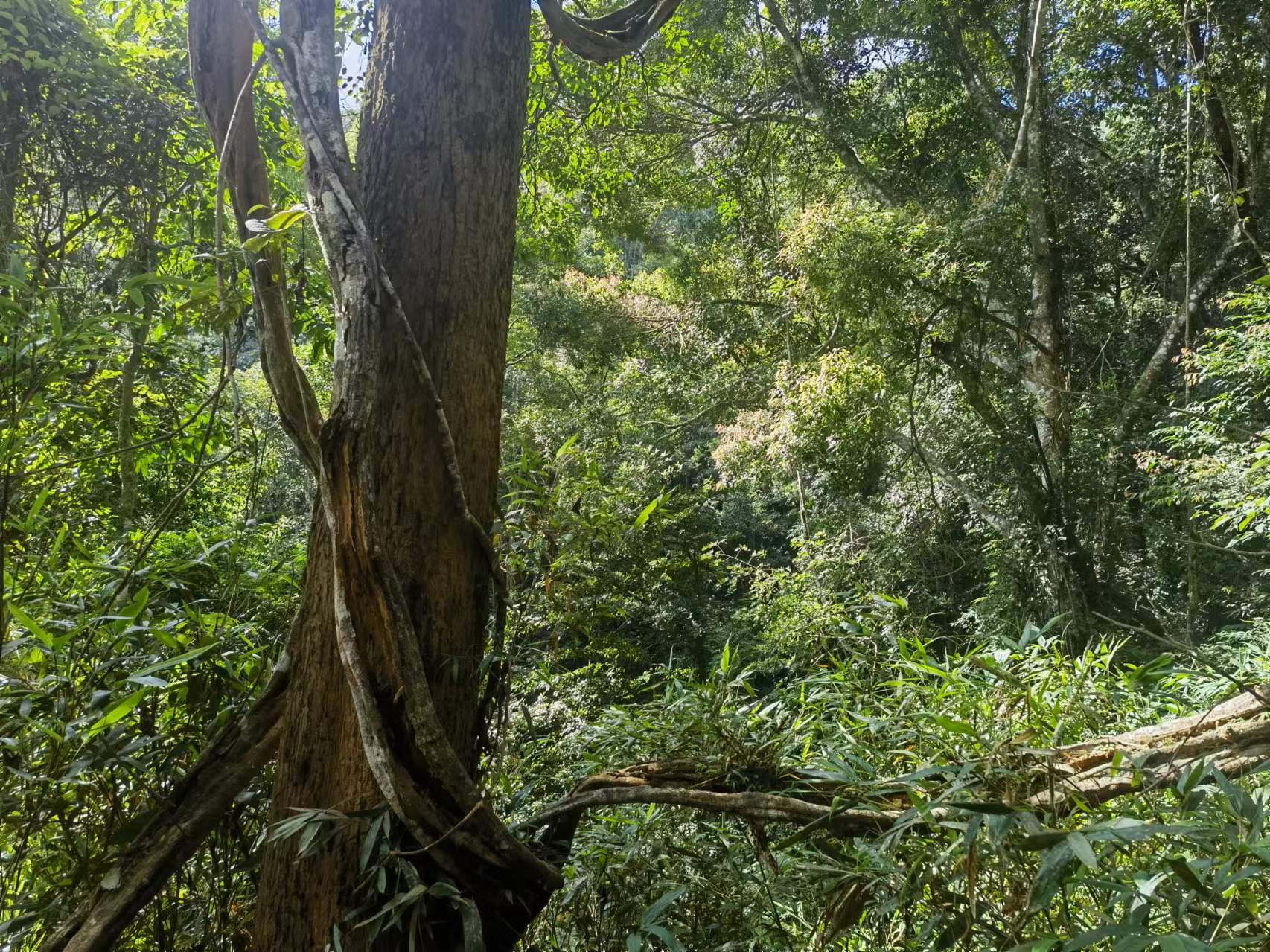
Trees and lianas in tropical forest. (Image by Gbadamassi G. O. Dossa)
 Appendix:
 Prev

