Physiological traits: predicting diameter and height growth of subtropical tree species
They found that stem diameter and height growth of juvenile trees of subtropical broadleaf species were correlated closely with leaf and stem functional traits (i.e., photosynthesis, hydraulics and nutrient-use efficiency). Therefore, these functional traits could be used to understand the composition, structure and dynamics of subtropical forests.
Furthermore, stem growth rates of evergreen species showed more dependence on leaf carbon gains, whereas stem hydraulic efficiency was more important for deciduous tree growth.
“Our results suggest that physiological traits (photosynthesis, hydraulics and nutrient-use efficiency) can predict tree diameter and height growth of subtropical tree species,” said Dr. FAN Zexin of XTBG.
The differential resource acquisition and use strategies and their associations with tree growth between evergreen and deciduous trees provide insights into explaining the coexistence of evergreen and deciduous tree species in subtropical forests.
The study entitled “Differential determinants of growth rates in subtropical evergreen and deciduous juvenile trees: carbon gain, hydraulics and nutrient-use efficiencies” was featured as cover story on Tree Physiology.
Contact
FAN Zexin Ph.D Principal Investigator
Key Laboratory of Tropical Forest Ecology, Xishuangbanna Tropical Botanical Garden, Chinese Academy of Sciences, Mengla, Yunnan 666303, China
E-mail: fanzexin@xtbg.org.cn
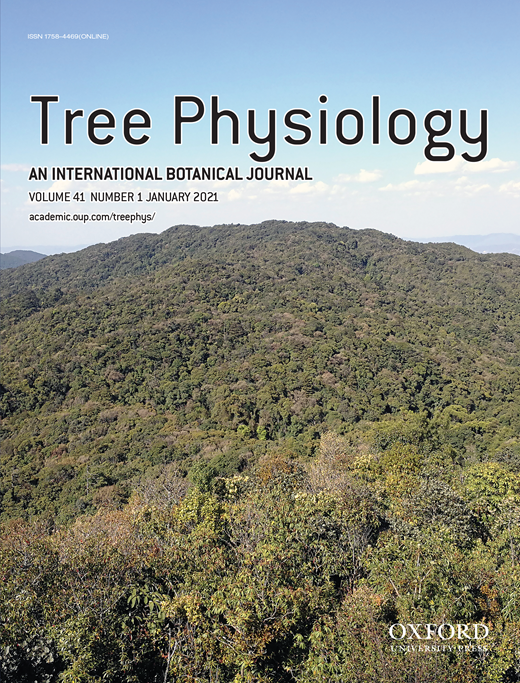
The study featured as cover story of Tree Physiology (Image from OUP).
 Appendix:
 Prev

