The Advanced Field Course in Ecology and Conservation - Xishuangbanna (AFEC-X) comes to its 18th year. On October 17, the AFEC-X 2026 opened at Xishuangbanna Tropical Botanical Garden (XTBG). The course brings together 27 early-career researchers from 21 research institutions and conservation organizations across 11 countries. They will have intensive interdisciplinary learning and field research for 44 days.
At the opening ceremony, Prof. Quan Ruichang, deputy director of XTBG, encouraged the trainees to seek research inspiration through interdisciplinary exchange, build close collaborations with fellow participants, and turn friendships and academic networks into long-term assets. He also urged them to embrace challenges and grow through independent research projects filled with uncertainty.
Prof. Chen Jin, coordinator of the course, reviewed the history and legacy of AFEC-X and introduced the curriculum and teaching team for this year’s program.
Prof. Charles Cannon made a keynote presentation entitled “In-situ, ex-situ, and re-situ conservation in the Anthropocene”.
The course is both edge-cutting and practical. In addition to systematic instruction in classical theories such as tropical biology, conservation biology, and plant–animal interactions, it includes large language models and AI-assisted biodiversity monitoring.
The participants will receive hands-on training in R-language experimental design and statistics, species distribution modeling, and DNA data and conservation. They will also conduct field studies in Yuanjiang dry-hot valley savannas, 20-ha tropical seasonal rainforest dynamics plot and canopy crane in Xishuangbanna.
Furthermore, they will work in groups to complete independent research projects, covering the entire research process from topic selection and experimental design to data collection and final defense.
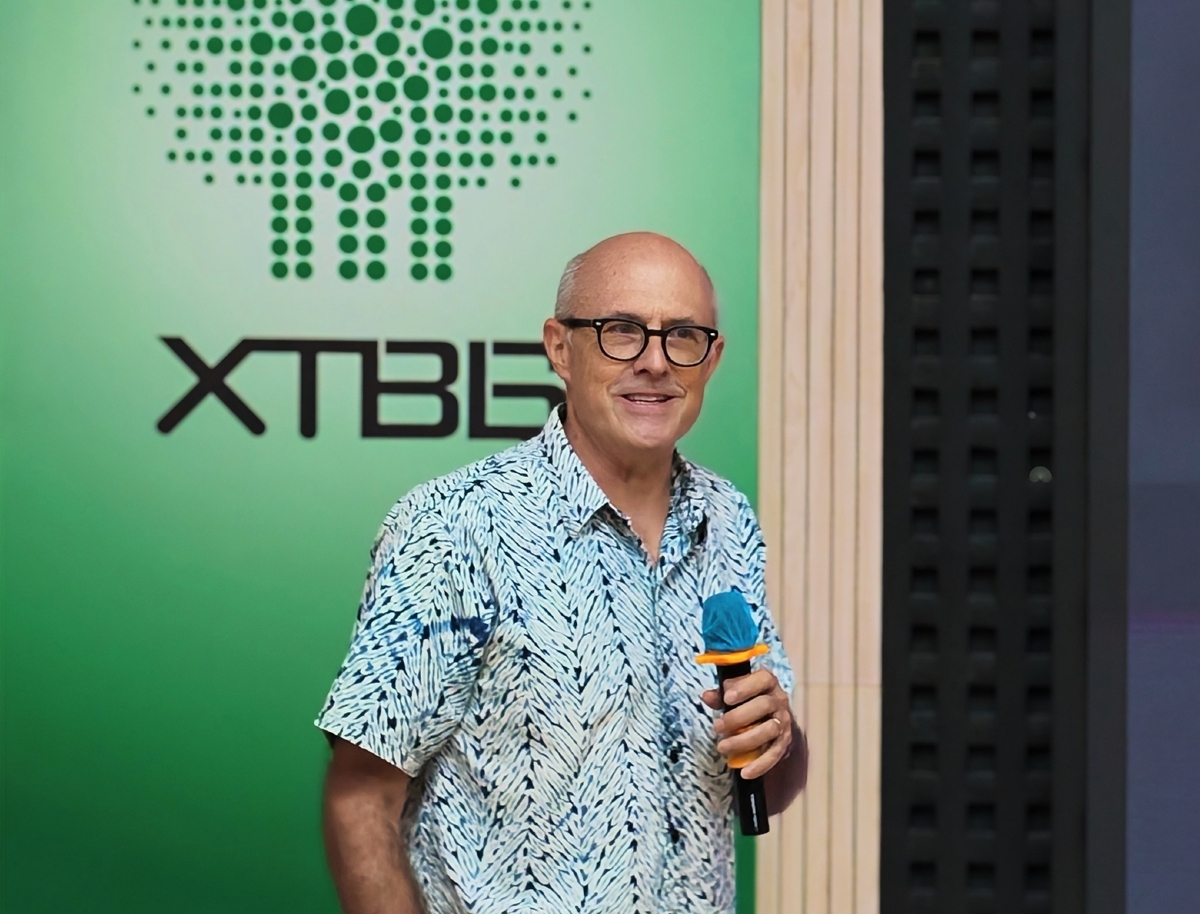
Prof. Charles Cannon makes a keynote presentation.
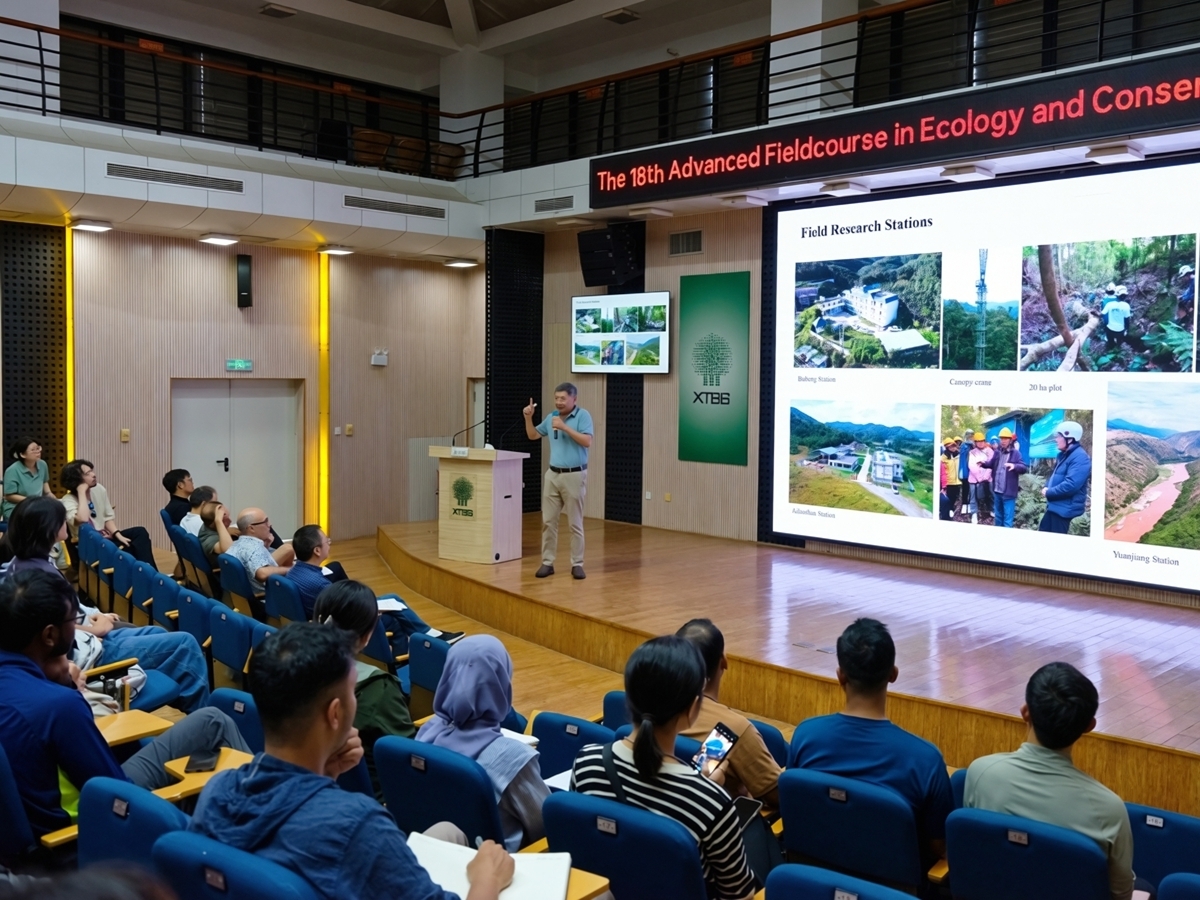
Prof. Chen Jin introduces the history and curriculum of the course.
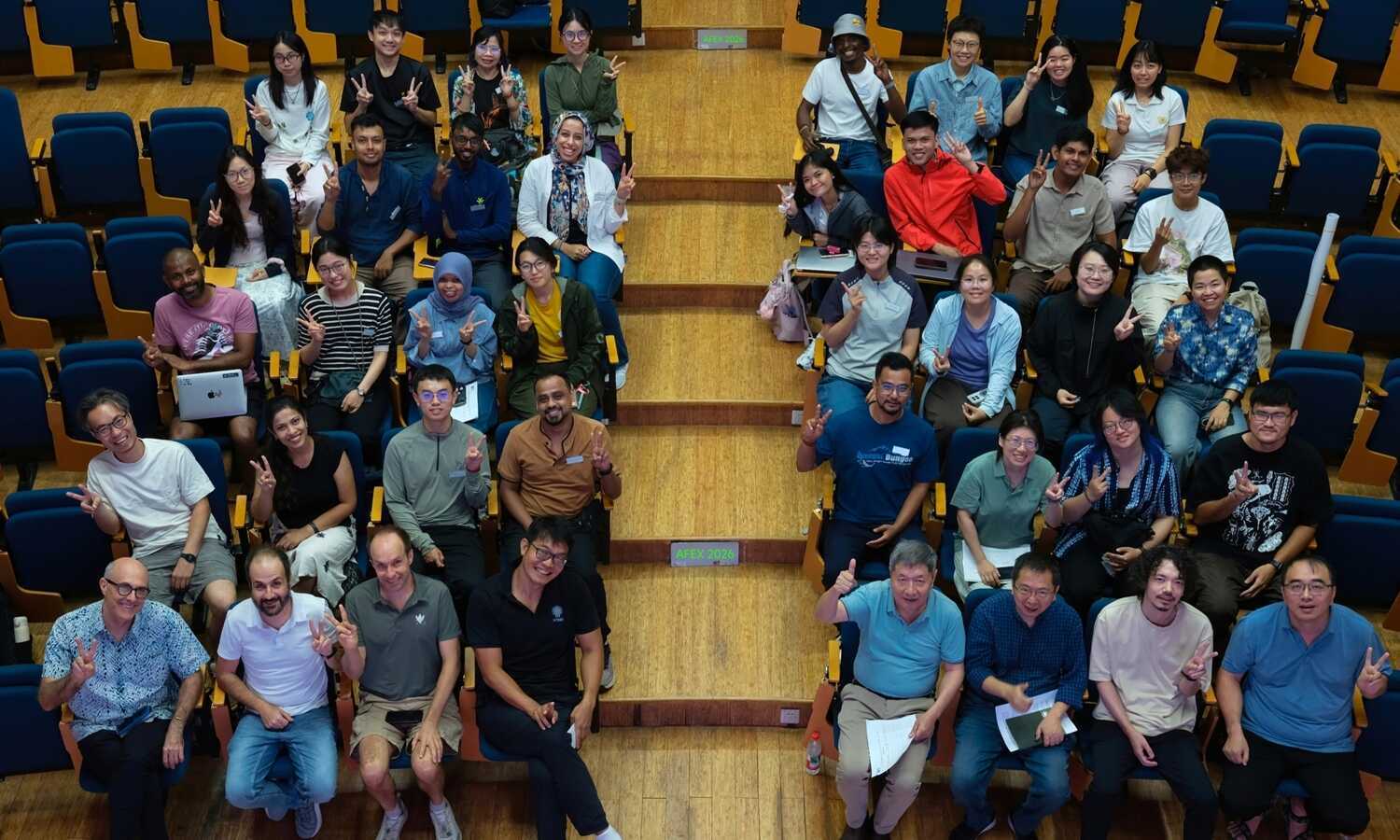
Participants pose a group photo at the opening ceremony.


