A rare and remarkable flowering event is currently taking place at Xishuangbanna Tropical Botanical Garden (XTBG) of the Chinese Academy of Sciences, where the unique "corpse flower" has finally bloomed. Known scientifically as Amorphophallus gigas, this enormous plant is infamous for the pungent odor it releases upon blooming, a smell often compared to rotting flesh.
Corpse flowers are renowned for producing the tallest inflorescences in the world. They bloom for only a few days, emitting a stench reminiscent of carrion to attract pollinators.
The Amorphophallus gigas plant arrived at the garden in 2025 and reached full bloom on April 18, marking the first such event in China. The rare occurrence has drawn thousands of visitors and online viewers, offering a unique glimpse into one of the world’s tallest and most elusive inflorescences.
Amorphophallus gigas is a rare and hard to find species native to the hot and humid jungles of Sumatra.It grows big and large and is often compared to Amorphophallus titanum for rarity and it’s huge unusual inflorescence. However, it has a much narrower distribution and scarce field records, making both research and cultivated flowering extremely rare.
“It is not as large as an Amorphophallus titanum bloom, but its uniquely tall inflorescence is a significantly rarer occurrence,” said WU Fuchuan of XTBG.
The plant can grow up to over 3.5–4 meters in height. Once triggered, the inflorescence elongates rapidly. When fully open, it emits a powerful stench reminiscent of rotting flesh or dead fish. The metabolic heat helps volatilize odor-laden compounds, mimicking the body temperature of a freshly dead animal to attract carrion-feeding pollinators.
However, Amorphophallus gigas periodically dies back to its corm and rests for several months before producing new stems. Under appropriate conditions, it will develop a large corm and bloom within five to ten years.
The short-lived bloom lasts only a few days. Once it collapses, another inflorescence will not appear for some time. "It’s not going to happen next year. It’ll be several years before it happens again," Wu added.
Another related species, Amorphophallus hewittii, came into bloom at the same time. Both plants reached their peak on April 18–19, offering a once-in-a-lifetime opportunity to witness two giant Amorphophallus species flowering simultaneously in a Chinese botanical garden. The two species produced inflorescences of 2.5 meters and 1.4 meters tall, respectively.
"The flowering of these two plants, together with the earlier flowering records of Amorphophallus titanum at XTBG in 2017 and 2022, is a testimony to our expertise in the collection and conservation of Amorphophallus species," said XING Yaowu, director of XTBG.
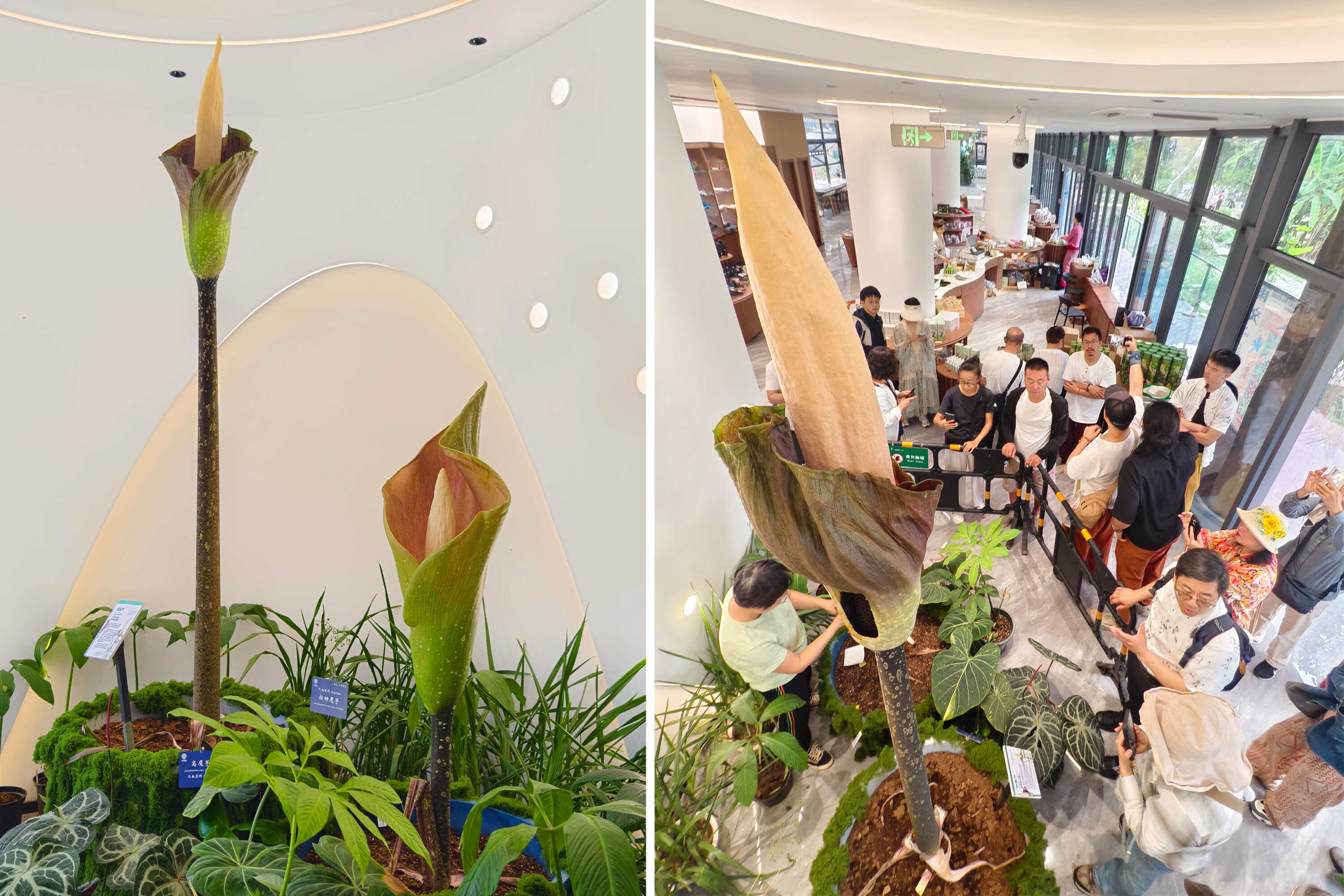
Visitors view Amorphophallus gigas and Amorphophallus hewittii in full bloom. (Image by XTBG)
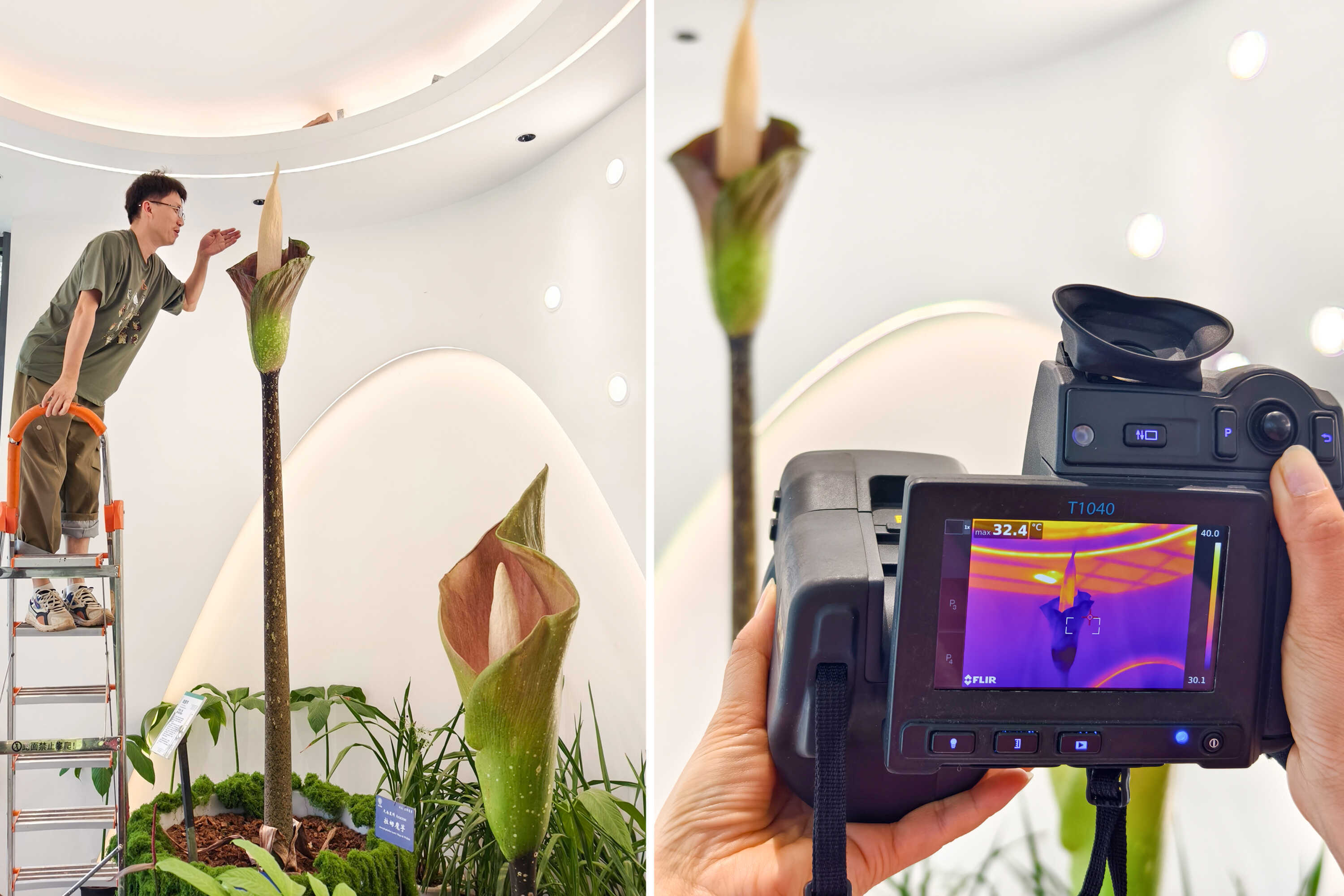
The process of Amorphophallus gigas and Amorphophallus hewittii is live-streamed. (Image by XTBG).
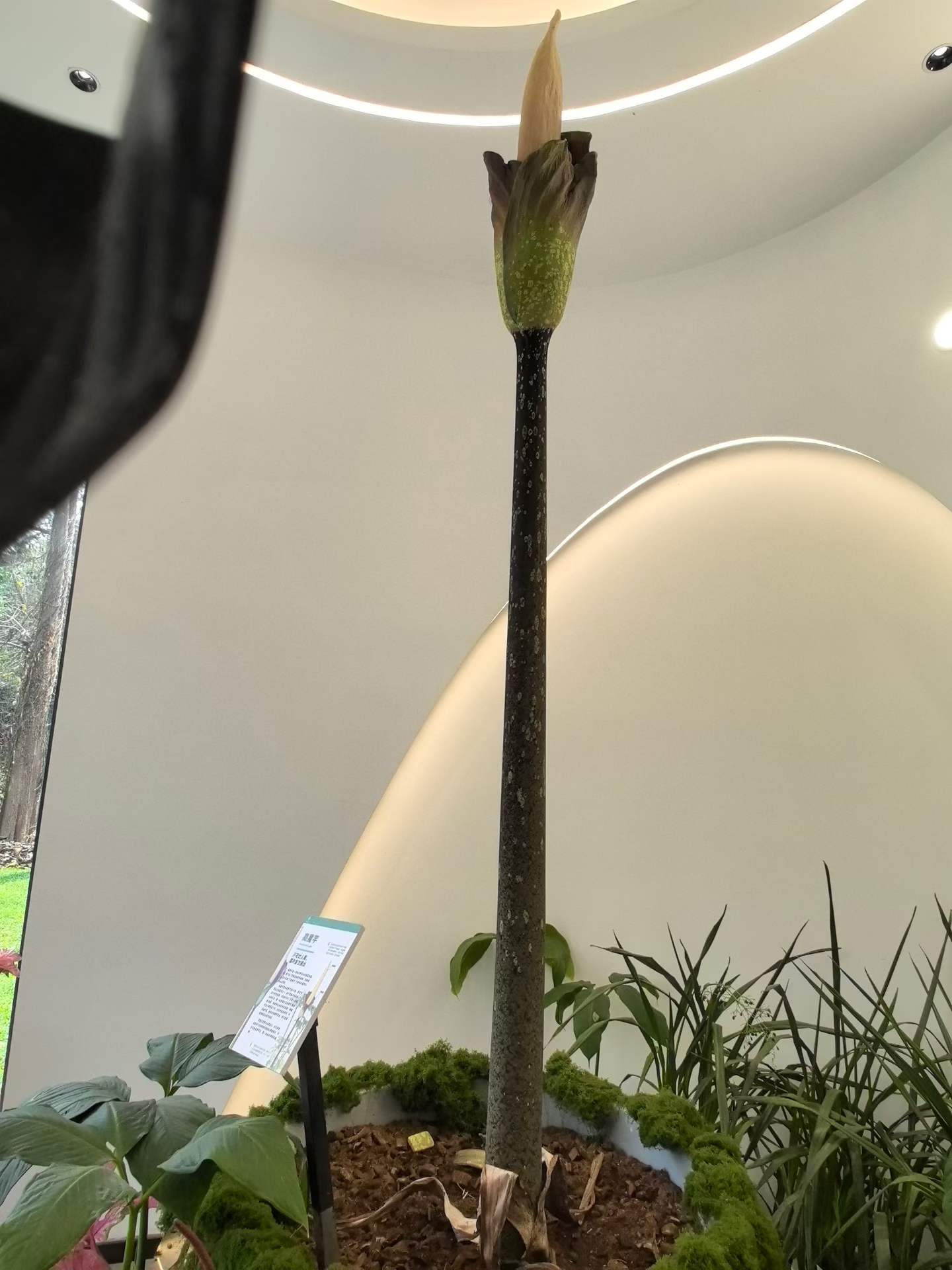
Amorphophallus gigas in bloom. (Image by XTBG)
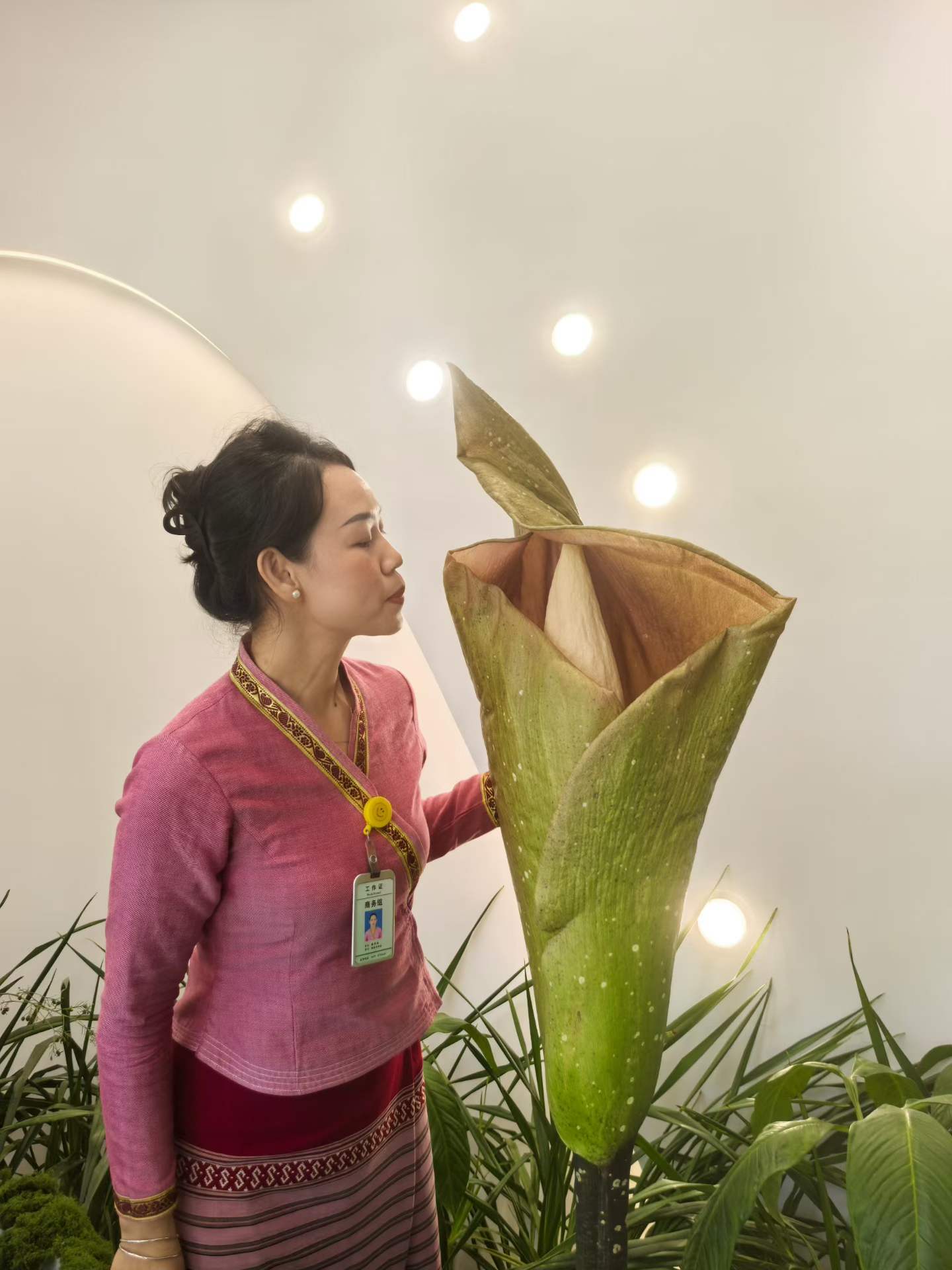
A tour guide and Amorphophallus hewittii. (Image by XTBG)
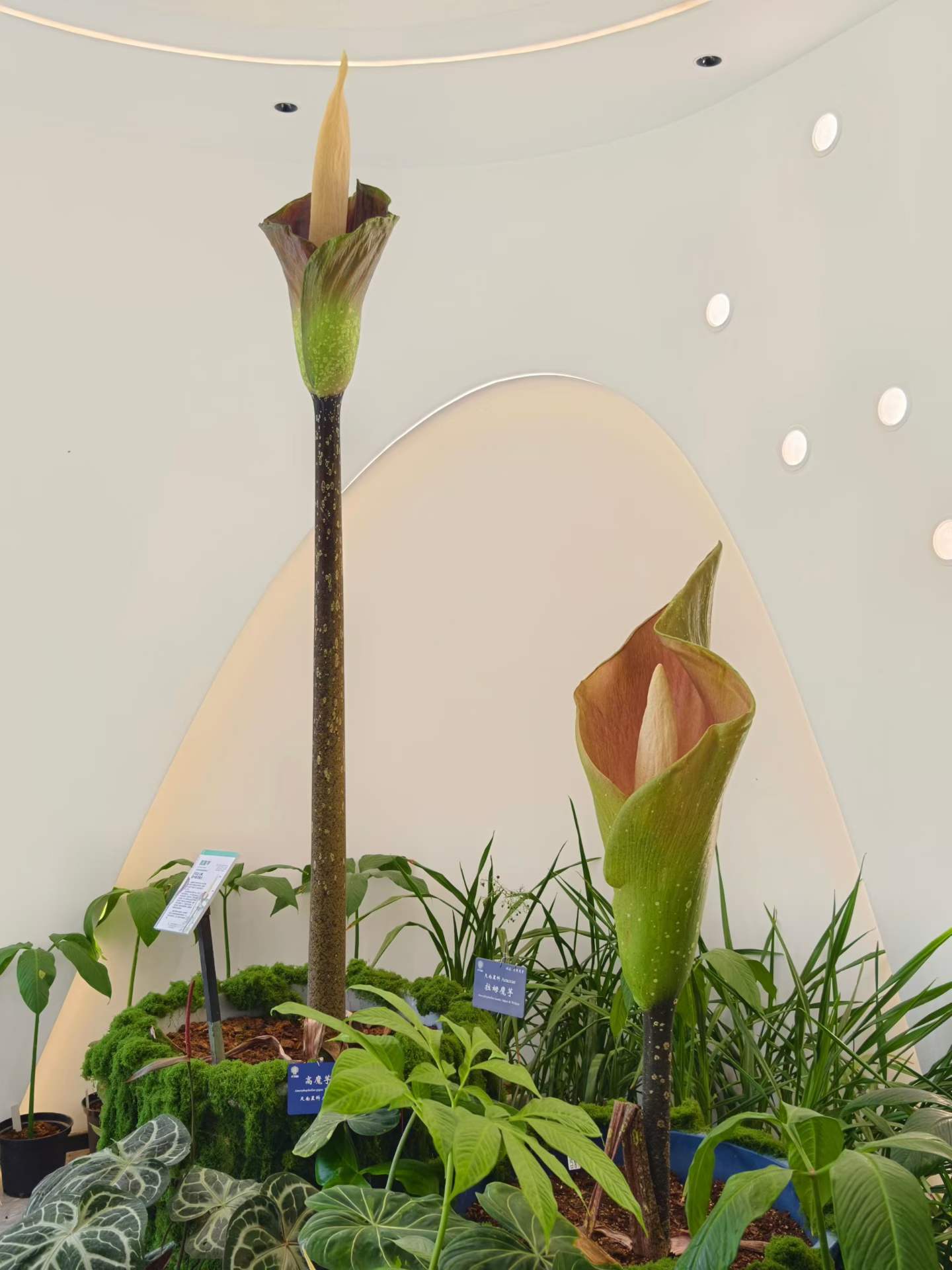
Amorphophallus gigas and Amorphophallus hewittii in full bloom. (Image by XTBG)


