The third workshop on population genomics (Population Genomics Workshop 2025) was held at Xishuangbanna Tropical Botanical Garden (XTBG) from December 9 to 21. It brought together a world-class faculty to study state of the art techniques for analysis of genomic data within species and closely related species complexes.
The workshop aimed to support early-career researchers, senior PhD students, and young scholars from Belt and Road and other developing countries. Through an intensive model combining thematic lectures, hands-on computer practice, and interactive discussions, the program focused on cutting-edge theories and methods in population genomics, enhancing capacity for biodiversity conservation and global change research.
The workshop covered topics such as population history inference, population structure and ancestry analysis, ancient DNA, genome-wide genealogy and recombination, complex trait and GWAS, multi-omics integration, pan-genomics, and climate adaptation.
With dedicated scholarships offered to participants from Belt and Road and developing countries, the workshop attracted trainees from Indonesia, Malaysia, Qatar, Japan, Russia, Pakistan, and other nations. During the program, participants conducted a scientific field trip to the Xishuangbanna Tropical Rainforest Ecosystem Research Station (Bubeng Station) of CAS, strengthening their understanding of the full research chain from fieldwork to data analysis.
Through systematic training and direct guidance from frontline experts, the trainees significantly improved their data analysis skills and research design capabilities.
Organized by XTBG, the workshop was co-implemented by the Shanghai Institute of Materia Medica of CAS and the Center for Evolutionary Biology at Fudan University.
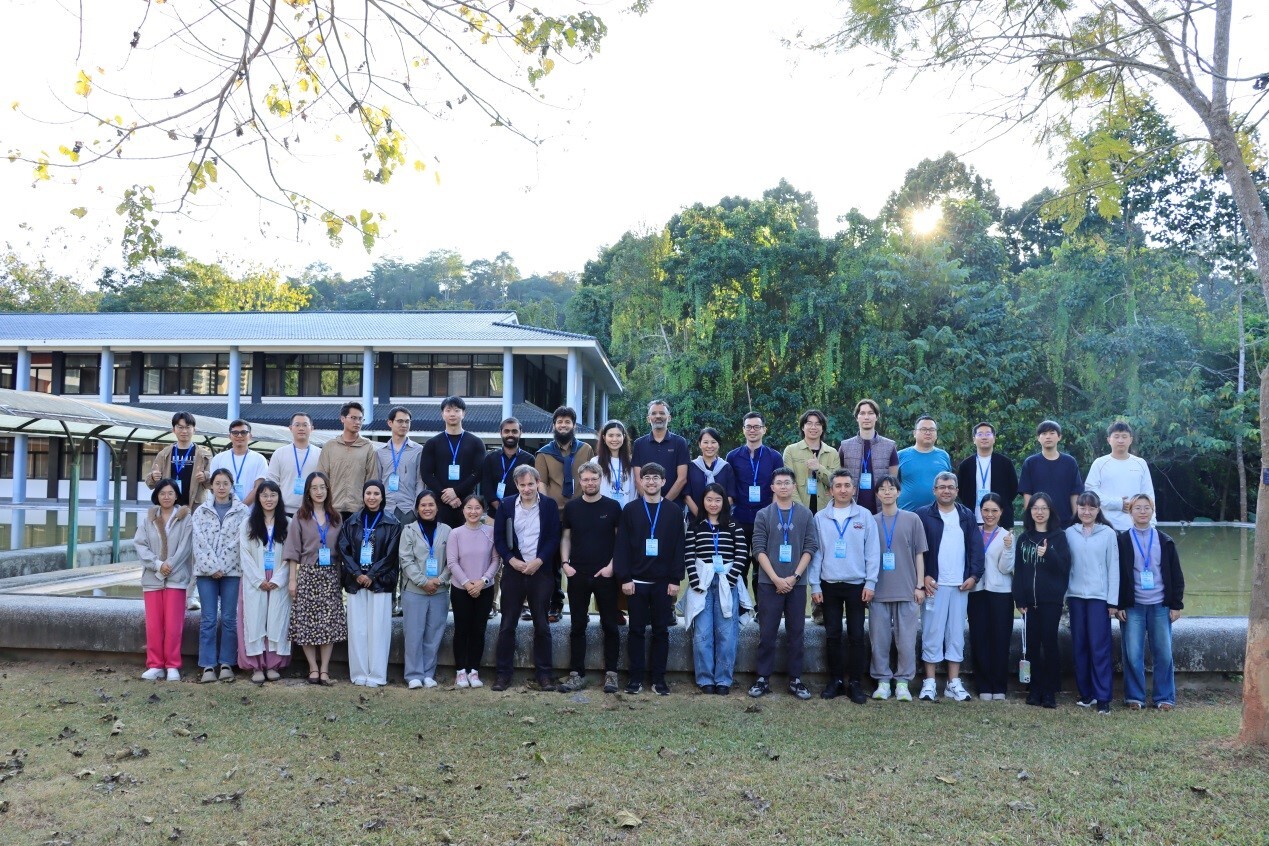
Participants pose a group photo.


